

One of the biggest transitions I made in my career was moving from IT Engineer to leadership. For some, this shift might seem easy and almost effortless. For me, that was not the case.
Early in my career, like many technology professionals, I focused on mastering the technical side of the job. I enjoyed solving complex problems, understanding systems, and delivering results. My success was measured by how well I could complete projects, fix issues, and contribute as an individual performer.
When you begin your career as an engineer, analyst, or in many other professional roles, your success is usually measured by how well you perform your individual work. Your skills, problem-solving abilities, communication, and attention to detail are what set you apart.
But when you move into leadership, the rules change.
Success is no longer defined by how much work you personally complete. Instead, it’s defined by how effectively you guide, support, and empower others.
This shift is one of the most challenging—and most important—transformations in a career.
When the Rules Changed
When I first moved into leadership, I quickly realized that the skills that helped me succeed as an engineer were not the same skills required to lead a team.
As an engineer, I could solve problems myself. I could dive into systems, analyze the issue, and produce a solution. But as a leader, my responsibility was no longer to solve every problem personally.
My responsibility became helping others succeed.
That meant learning how to communicate differently, how to delegate effectively, and how to trust others with work that I previously handled myself.
It also meant learning patience. Leadership requires stepping back and allowing people to learn, grow, and sometimes make mistakes along the way.
A Lesson From My Early Leadership Journey
In my book From IT Engineer to IT Manager, I share a story about one of the early moments when I realized I needed to change my approach to leadership.
Early in my management journey, I remember facing a technical challenge with my team. My instinct was to jump in and fix the problem myself. After all, that had always been my strength.
But something important happened in that moment.
Instead of immediately taking over, I paused and allowed my team members to work through the issue together. I guided the discussion, asked questions, and encouraged them to think through possible solutions.
What I saw was powerful.
The team collaborated, shared ideas, and eventually solved the problem themselves. More importantly, their confidence grew. They realized they were capable of solving complex problems as a team.
That moment taught me a lesson that has stayed with me throughout my leadership career: leadership is not about being the smartest person in the room—it is about helping others succeed.
The Leadership Mindset
Making the shift from individual contributor to leader requires a change in mindset.
Instead of asking:
“How can I solve this problem?”
You begin asking:
“How can I support my team in solving this problem?”
Instead of focusing only on your own performance, you begin focusing on the growth, development, and success of others.
Leadership is about influence, guidance, and creating an environment where people can do their best work.
The Power of Teamwork
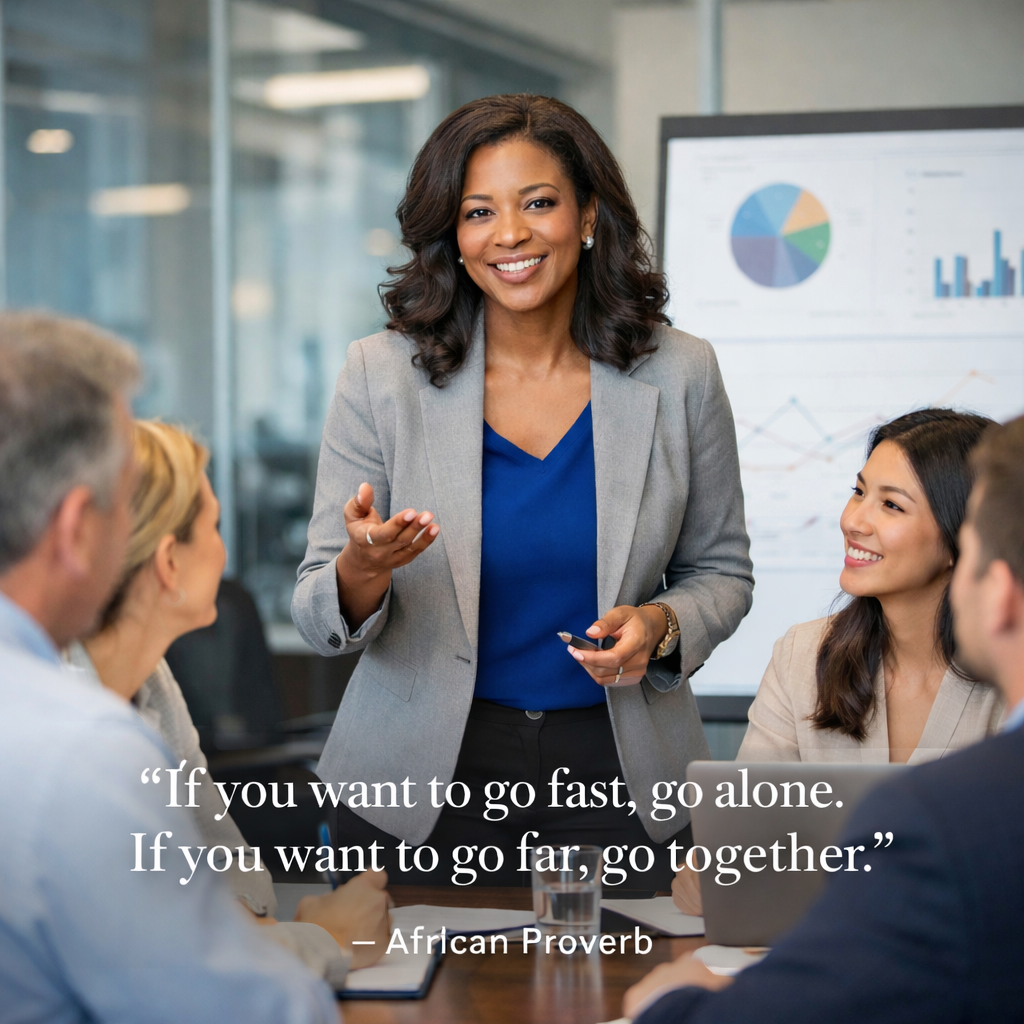
There is a popular African proverb that captures the essence of leadership perfectly:
“If you want to go fast, go alone. If you want to go far, go together.”
The meaning behind this proverb is simple but powerful.
True leadership is about building teams and collaboration. Long-term success happens when leaders bring people along rather than trying to accomplish everything alone.
An individual may move quickly on their own, but sustainable progress happens when people work together toward a shared goal.
As leaders, our role is not to race ahead alone. Our role is to guide the team forward together.
Leadership Is a Journey
The transition from technical professional to leader is not always easy. It requires learning new skills, adjusting your mindset, and sometimes letting go of the habits that once made you successful.
But it is also one of the most rewarding journeys in a career.
Leadership allows you to create opportunities for others, develop future leaders, and make a broader impact than you ever could on your own.
If you are currently navigating this transition in your career, remember that the shift takes time.
Be patient with yourself. Continue learning. Continue growing.
And most importantly, remember that leadership is not about how far you can go alone—it is about how far you can go together.
I found a refreshing way to understand the issue while browsing online and I look forward to reading more from you
I found an engaging overview from start to finish when I needed it most and I look forward to reading more from you
I have read some excellent stuff here Definitely value bookmarking for revisiting I wonder how much effort you put to make the sort of excellent informative website
Your explanation gave me a simple explanation of a complex idea while browsing online and I look forward to reading more from you
I found good reasons to explore the topic further today and I look forward to reading more from you
The article presents a simple explanation of a complex idea when I needed it most and I look forward to reading more from you
The article presents a refreshing way to understand the issue during my research and I look forward to reading more from you